QUIC has been on my mind for quite some time. I remember mentioning it as part of my “what’s next?” slides at the first edition of JanusCon, 5 years ago, and of course it was very much a topic in my opening slides at the latest JanusCon as well. For one reason or another, though, I never actually started looking into it, despite being something that, from a distance, I found quite interesting, especially for all the ongoing work going on in the Media Over QUIC Working Group at the IETF. That doesn’t mean we’ve been idle, though. A few…
-
-
After five long years from the first edition, our Janus conference was finally back, once again in our beautiful Naples! More precisely, we met RTC developers and aficionados from all over the world on the 29th and 30th of April 2024, for two days of fun and interesting presentations. Great food was eaten, amazing weather was enjoyed, and I think we all had a lot of fun! If you want to check the recordings or the slides of the talks, you can find them in the schedule section of the JanusCon website. This is something I was really looking forward…
-
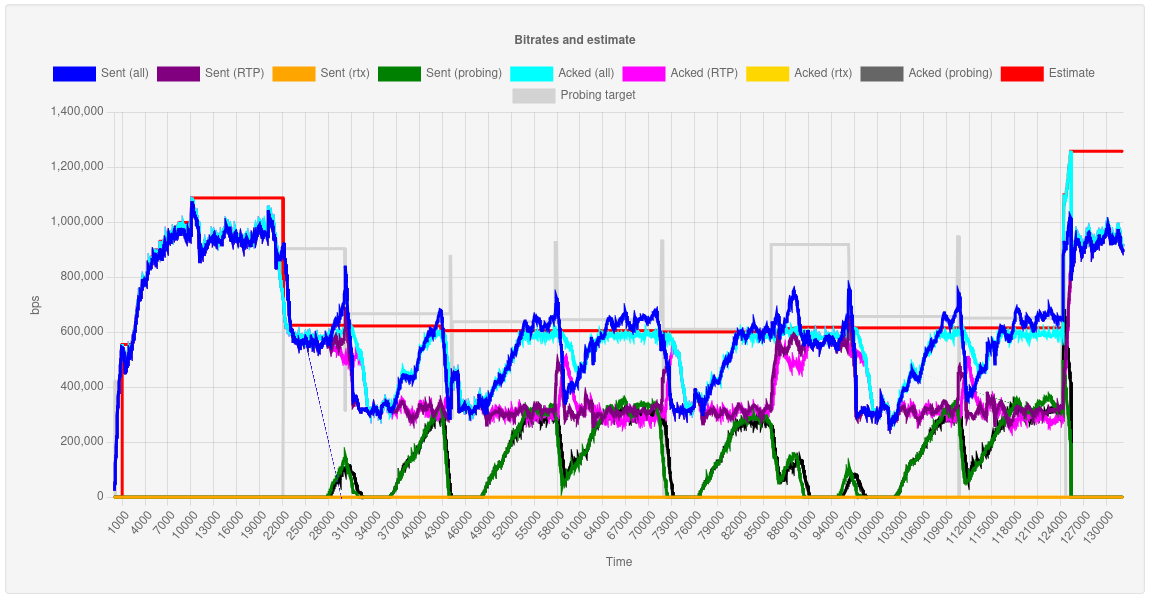
A few weeks ago I attended the first edition of what turned out to be a great event, RTC.On, and I took that opportunity to submit a talk on something I wanted to work on for quite some time: bandwidth estimation in WebRTC and, more specifically, Janus. The main objective of that presentation was not only to “force” myself to work on this topic and share the results, but also to try and provide everyone with some more insight on what is ostensibly one of WebRTC’s best kept “secrets”: not out of malice (at least I don’t think so), but…
-
As an audio mixer and MCU, the AudioBridge plugin is quite a popular plugin among Janus users and developers. It’s definitely a foundational component in our own Virtual Event Platform, for instance, where while we use an SFU approach for video streams, audio is always mixed instead. I mentioned efforts around this plugin a few times already, like when I discussed how to use it to build social audio applications like Clubhouse or Twitter Spaces, or how it could be bridged (pun unintended!) to the SIP world. I also stressed out the importance of audio in the WebRTC world when…
-
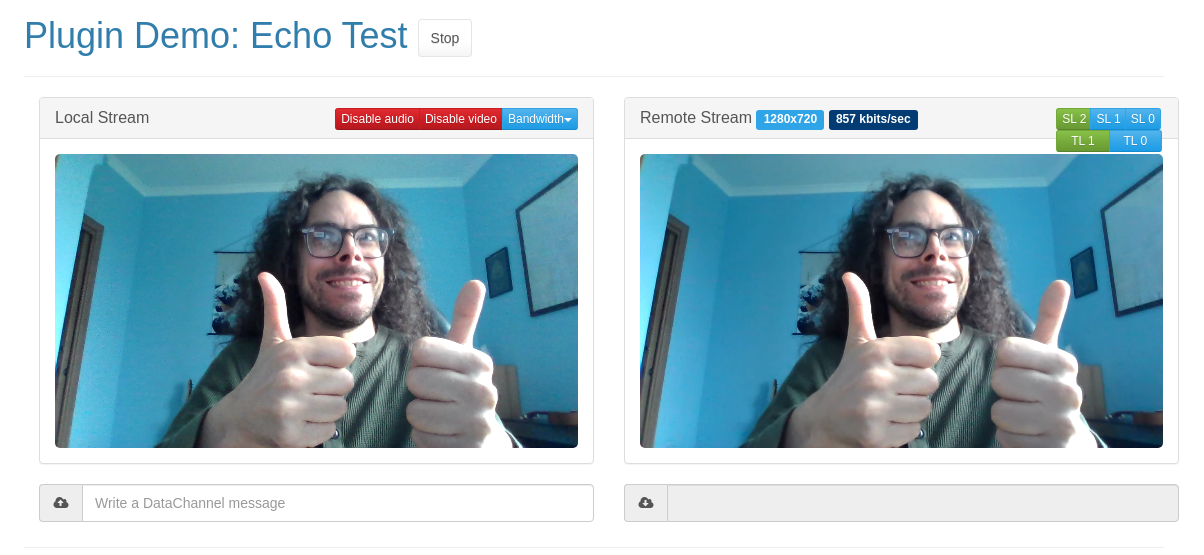
I only recently found out that Chrome has started shipping experimental support for VP9 and AV1 simulcast. If you’ve visited this blog before, you know what simulcast is already (if you don’t, make sure you read this post first!) and you may recall we’ve talked, on separate occasions, about both codecs, but typically with respect to their SVC capabilities, namely in the post on VP9/SVC support in Janus, and the one on our AV1/SVC experiments. Of course, I was very much interested in checking out how I could extend the simulcast support we have in Janus to VP9 and AV1…
-
It’s been a while since last time we spoke of WHEP: just to brush up your memory, it was a few months ago, when we first introduced WHEP as a companion protocol to WHIP, that we had talked about a few other times already. At the time, we explained how WHIP and WHEP both play a quite important role in the future of WebRTC-based broadcasting. WHIP (WebRTC-HTTP ingestion protocol) is a protocol that was conceived to facilitate the process of media ingestion via WebRTC, something that in “traditional” broadcasting is usually done by means of protocols like RTMP. WHEP (WebRTC-HTTP…
-
I’m always interested in testing new codecs, especially when it comes to WebRTC. Some time ago, for instance, I talked about my experiments with AV1 and H.265, AV1-SVC or multiopus. As such, when a new codec called Lyra was announced that promised to give great audio in very low bitrates, I was definitely curious. In this blog post I’ll describe the steps I went through to get it to work in browsers and, most importantly, Janus. What’s Lyra? If you’re a fan of music as I am, the world “lyra” actually doesn’t bring a codec to mind at all, but…
-
Audio conversations that span to hundreds, if not thousands, of people have been quite the rage in the past few years. Podcasts are a good example of this success: there have never been so many as these days, and there’s a certain appeal to just listening to a conversation without the actual need for any visual aid or medium. It becomes even more interesting when you envision the possibility of more interactive conversations, where anyone from the audience can chime in at any time and share their thoughts. This has been at the basis of the success of platforms like…
-
One question we often get is: how do I use the SIP and VideoRoom or AudioBridge plugin together? The short answer is that directly you can’t, because of how Janus is conceived. While Janus is indeed modular, and made of different plugins that all refer to the core, its plugins don’t really talk to each other. This means that it’s true that the SIP plugin allows Janus to act as a SIP gateway, but to facilitate WebRTC users to engage with a SIP infrastructure, not add SIP functionality to other Janus plugins. That said, there are indeed some more “creative”…
-
If you’re confused about all these acronyms, you’re not alone! Those interested in WebRTC and broadcasting have probably heard about WHIP already: WHEP and WHAP maybe not as much And if you’re even more confused about why I chose a picture of Huey, Dewey and Louie as the featured image, that’s because in Italian they’re called “Qui, Quo e Qua”, which is the first thing that came to mind when I came up with the title. I know, it’s incredibly stupid, but please bear with me: I’ve just come back from my summer break! We’ve talked about WHIP, a new…