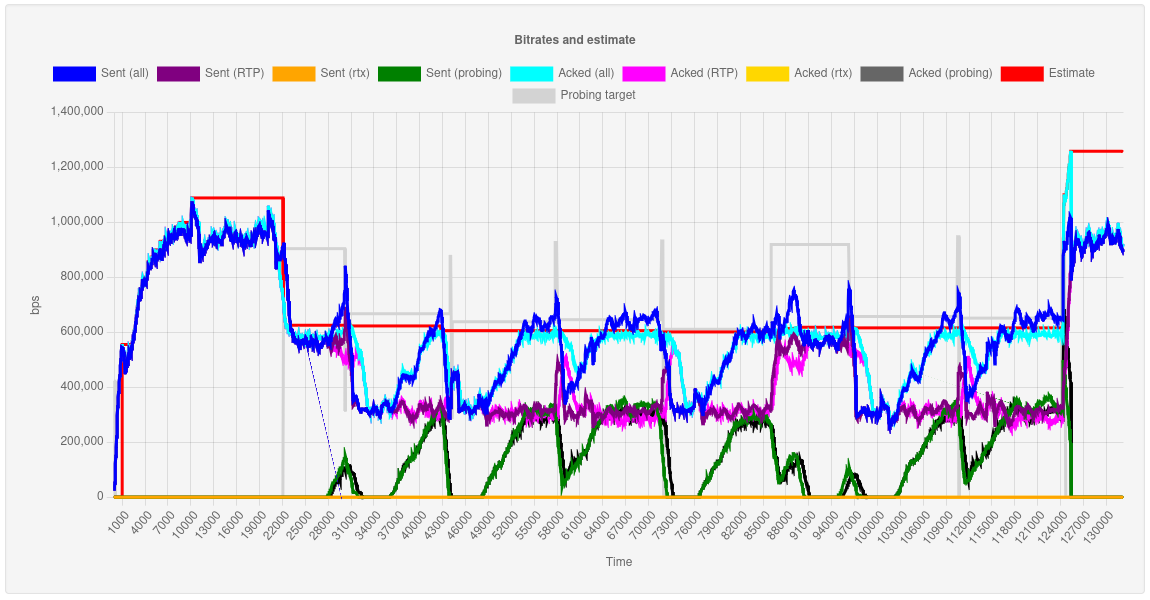
A few weeks ago I attended the first edition of what turned out to be a great event, RTC.On, and I took that opportunity to submit a talk on something I wanted to work on for quite some time: bandwidth estimation in WebRTC and, more specifically, Janus. The main objective of that presentation was not only to “force” myself to work on this topic and share the results, but also to try and provide everyone with some more insight on what is ostensibly one of WebRTC’s best kept “secrets”: not out of malice (at least I don’t think so), but…
-
-
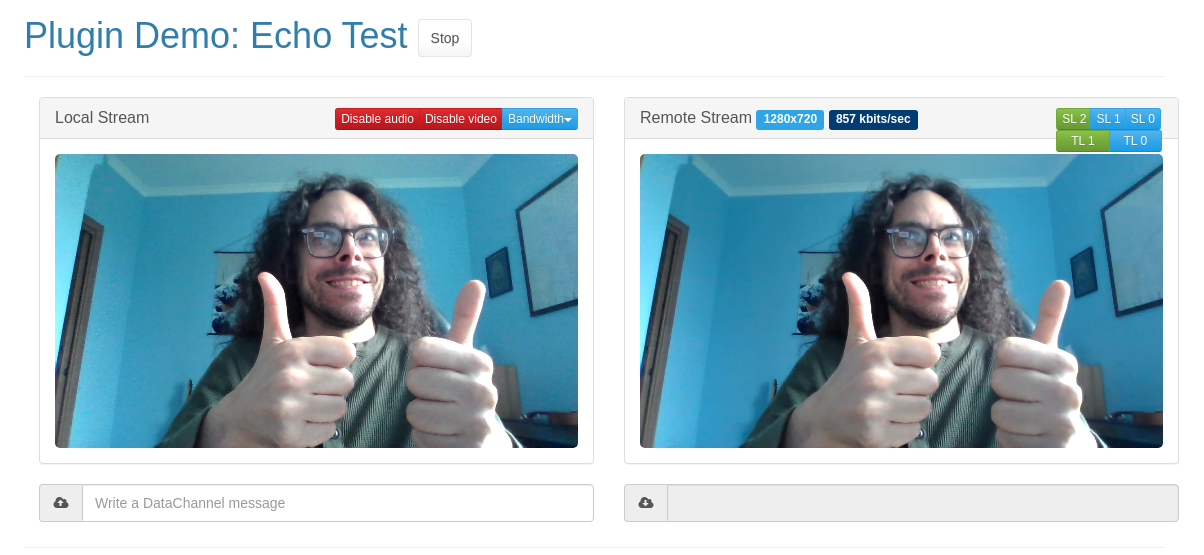
I only recently found out that Chrome has started shipping experimental support for VP9 and AV1 simulcast. If you’ve visited this blog before, you know what simulcast is already (if you don’t, make sure you read this post first!) and you may recall we’ve talked, on separate occasions, about both codecs, but typically with respect to their SVC capabilities, namely in the post on VP9/SVC support in Janus, and the one on our AV1/SVC experiments. Of course, I was very much interested in checking out how I could extend the simulcast support we have in Janus to VP9 and AV1…
-
About a year or so ago, we talked about how we added support for new codecs to Janus, namely AV1 and H.265, and why that was an interesting foundation for more exciting things to come. AV1 in particular was a very interesting addition, since it’s a joint effort of several companies to write a powerful royalty free video codec, explicitly conceived to support Scalable Video Coding (SVC) out of the box, which is obviously a very appealing feature, especially in the context of WebRTC (e.g., for conferencing and broadcasting purposes). At the time, while Chrome had started, thanks to the…